Dry Needling
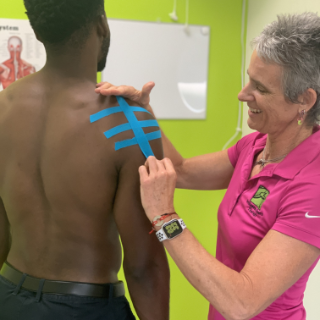
Big News! Austin got his dry needling certifiacation over the weekend!
WHAT IS DRY NEEDLING?
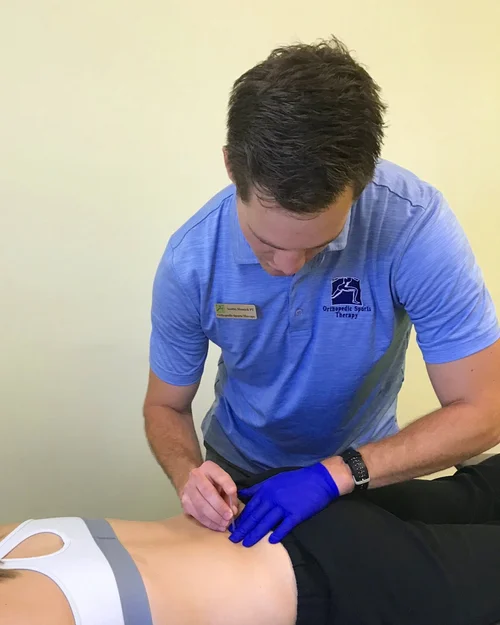
Growing in popularity, dry needling is a way to treat muscle pain. A physical therapist, certified in dry needling, uses an acupuncture needle to penetrate directly into the muscle being treated. The word “dry” comes from the fact that no medication or liquid can be injected into the body.
HOW DOES IT WORK?
There are many techniques that can be used when dry needling. Choosing the right technique for you depends on a few factors such as what muscle is being targeted, the goal of the treatment, and which one you respond best to. Pistoning is the technique that is used to get a “twitch response”. The technique of pistoning involves moving the needle up and down within the muscle to release a trigger point or knot. Winding is another commonly used technique that involves twisting the needling after its insertion. This technique is less likely to induce the “twitch response” while still effectively reducing pain and muscle tension.
WHY USE DRY NEEDLING?
Dry needling is a treatment tool used to facilitate a healing response to decrease muscle tension and improve pain. Dry needling is rarely an independent treatment, instead, it is an adjunct or adjuvant treatment. This means we use dry needling in order to create a window of opportunity to accomplish the primary therapy goals and maximize its effectiveness. For example, if strengthening your core is the solution to resolving your low back pain, but doing a plank is too painful, we can use dry needling to decrease your pain so that you can do a plank comfortably.
AM I APPROPRIATE FOR DRY NEEDLING?
Unfortunately, this question warrants the response of “it depends.” With great care, we (your physical therapists) take the time to select which treatments will the most effectively and efficiently help you reach your goals. Though most people would benefit from this treatment, there are some who we would not recommend dry needling. Obviously, if you have a fear of needles or are not comfortable with the idea of being needled, dry needling is not appropriate for you. Also, those who are sensitive or allergic to metals or those who have abnormal bleeding tendencies may not be the best candidates for dry needling.
IS ACUPUNCTURE BETTER THAN DRY NEEDLING?
The most common factor between dry needling and acupuncture is that they both use the type of needle. Aside from that, they are very different, but one is not necessarily better than the other. Acupuncture places the needles in predetermined meridians, or body maps, in order to restore the state of balance and health. Physical therapists place the needles directly into the structure that has been previously assessed as a contributor to the person’s pain or dysfunction. Though different, both professions are well qualified and exceptionally safe with their techniques. Ultimately, the goal of acupuncture and dry needling is to improve the lives of the client in front of us. So we support acupuncture and dry needling alike, as long as you reach your goals!
QUESTIONS?
This post is just a brief introduction to dry needling and how it may help you. If you have any questions about whether it may help you or concerns about the safety of this technique, please reach out. In fact, research shows the more people understand how the treatment is tailored to improve their pain and function, the better your outcome. So, feel free to reach out and we will be happy to help you.